
In the world of high-performance wiring, the choice of insulation material determines reliability, safety, and longevity.
Huafluoro’s fluoropolymer resins—FEP, PFA, and ETFE—are engineered to meet the demanding requirements of modern cable and wire applications across aerospace, telecommunications, industrial automation, and energy sectors.
Beyond material excellence, we provide comprehensive product support to ensure your success. This includes full access to equipment parameter settings and technical service assistance, tailored problem-solving for manufacturing challenges, and customized cable and wire solutions designed to your exact specifications.
From material selection through to production optimization, our team works alongside you to deliver results that perform.
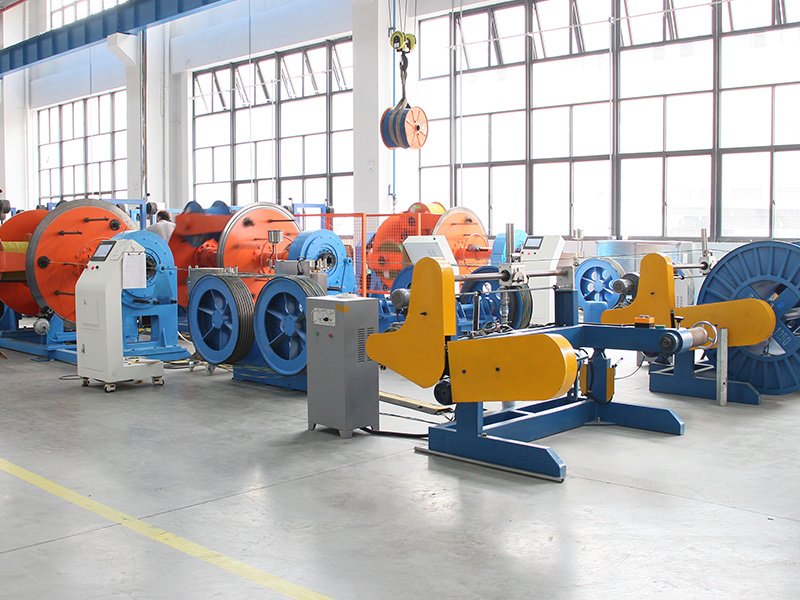
FEP (Fluorinated Ethylene Propylene)
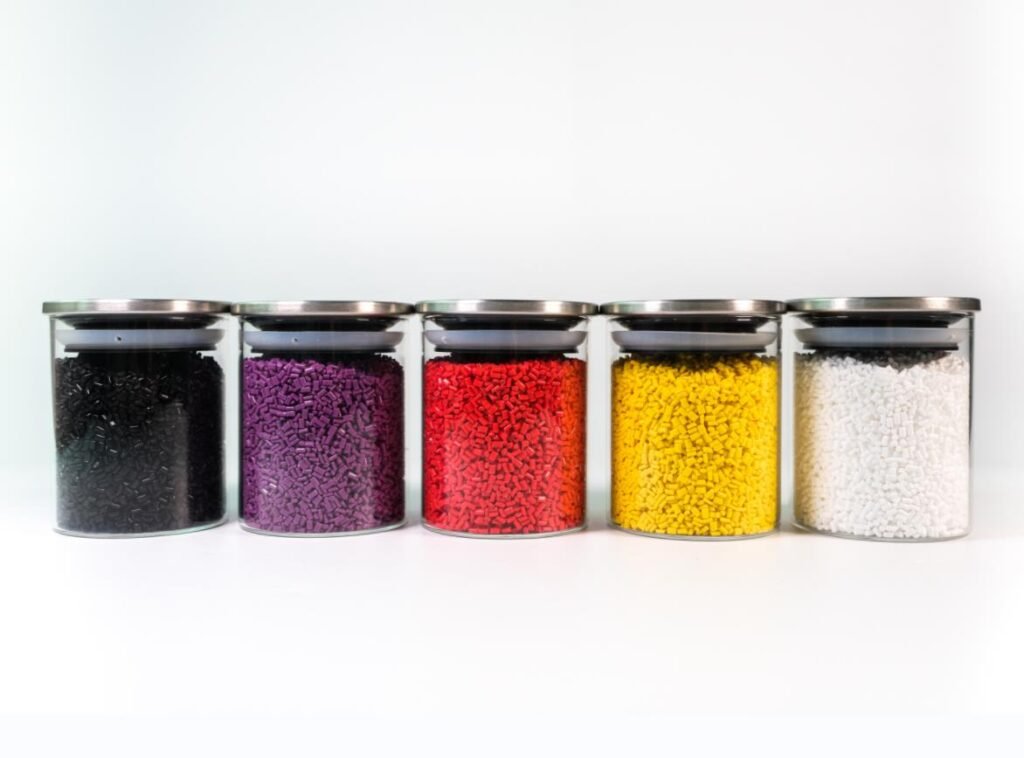
- Product Name: Perfluoroethylene-propylene / Perfluoro(ethylene-propylene) Copolymer Granules
- Aliases: Perfluoro(ethylene-propylene) Copolymer, Tetrafluoroethylene-Hexafluoropropylene Copolymer, Fluoropolymer-46, F46, FEP
- Performance Overview: FEP has a relative density of 2.12-2.17. Its mechanical strength, chemical stability, electrical insulation properties, lubricity, wear resistance, non-stickiness, aging resistance, and non-flammability are excellent, similar to PTFE. However, its heat resistance is slightly lower than PTFE, with a long-term service temperature of -85~200℃, an embrittlement temperature of -90℃, a melting point of 263℃, and a thermal decomposition temperature above 400℃. FEP exhibits better low-temperature flexibility than PTFE. Due to its lower surface tension, it has good adhesion to metals in the molten state. It is resistant to common chemicals and solvents, but not to molten sodium hydroxide and alkali metals. It can react with fluorine and strong oxidizing agents.
PFA (Perfluoroalkoxy)
- Product Name: Tetrafluoroethylene-Perfluoroalkyl Ether Copolymer Granules
- Aliases: Meltable Polytetrafluoroethylene (Meltable 4-F) PFA
- Performance Overview: PFA exhibits excellent chemical stability, physical and mechanical properties, electrical insulation properties, lubricity, non-stickiness, aging resistance, and non-flammability, similar to polytetrafluoroethylene (PTFE). It also possesses the same thermal stability as PTFE, with a long-term operating temperature of -250~250℃ and a thermal decomposition temperature above 450℃. Even in air at 285℃, it remains stable for 2000 hours. Its outstanding characteristic is its excellent thermoplasticity. Its high-temperature mechanical strength is approximately twice that of ordinary PTFE. For example, at 250℃, the tensile strength of ordinary PTFE is only 4.9 MPa, while that of meltable PTFE is 13.72 MPa, which is 1/2 to 1/3 of that at room temperature.

ETFE (Ethylene Tetrafluoroethylene)
- Product Name: Ethylene-Tetrafluoroethylene Copolymer
- Aliases: Copolymer of Tetrafluoroethylene and Ethylene, Fluororubber Resin-40 F40 ETFE
- Performance Overview: ETFE is a crystalline polymer with a melting point of 265~270℃; density of 1.73~1.75g/cm3; long-term operating temperature range is -60~+170℃. It exhibits excellent chemical resistance, heat resistance, abrasion resistance, radiation resistance, impact resistance, and electrical insulation properties. In particular, its mechanical properties, including strength and elongation, are superior to PFA and FEP.
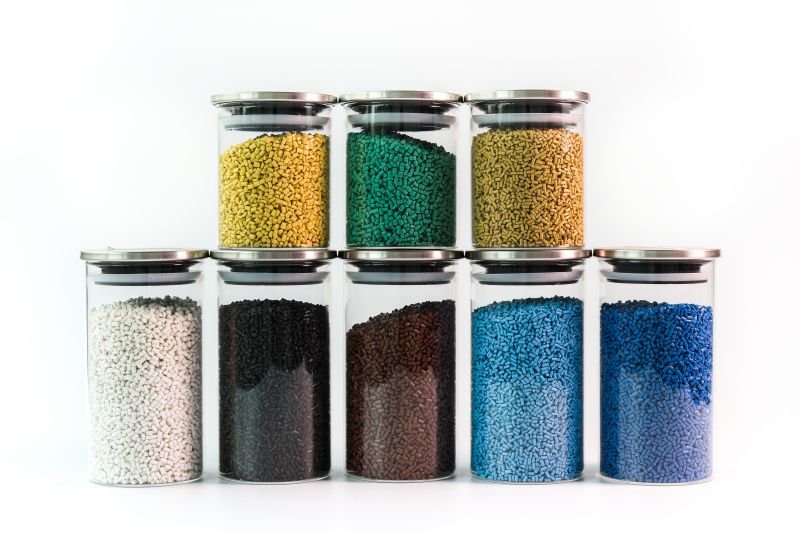
Resin Processing in Wires and Cables
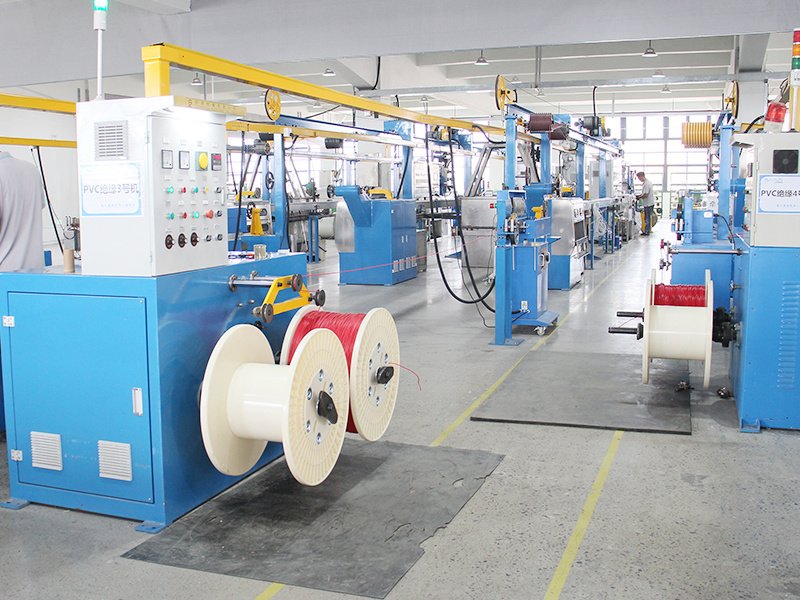
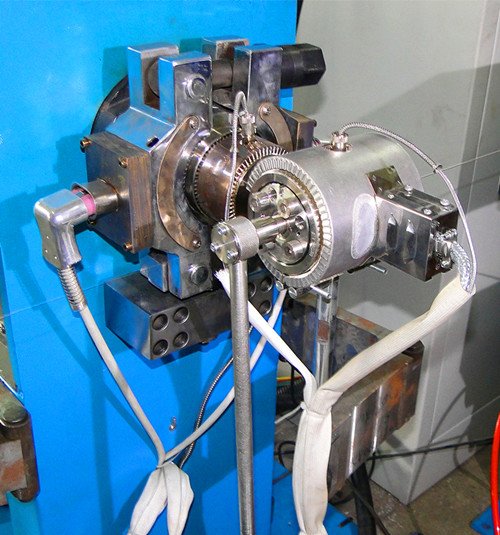
Melt Extrusion:
I. Resin Melting Process
In a resin melt quantitative extruder, the solid resin granules or powder must first be melted. This process is typically accomplished by heating the cylinder. While heated, the resin is propelled forward by the screw, gradually becoming a viscous flow. The heating temperature and screw speed can be adjusted according to the characteristics of different resins and product requirements.
II. Quantitative Extrusion Process
The molten resin enters the quantitative extrusion stage. This stage is mainly achieved through a precise control system. Resin melt quantitative extruders are usually equipped with advanced control systems that can monitor and adjust the amount of resin extruded in real time, ensuring that the amount extruded each time is precise. This is a crucial step in ensuring the consistent quality of the final product.
III. Extrusion Molding Process
The quantitatively extruded resin is finally wrapped around a copper wire through an extrusion die, forming the insulating jacket for wires and cables. After cooling and curing, the extruded product can be further processed or packaged.
For your cable and wire projects, Huafluoro delivers high-performance fluoropolymer materials along with comprehensive technical support—including equipment parameter settings, manufacturing troubleshooting, and customized solutions tailored to your specific needs.
Please Feel Free to Contact Us!
Contact Us
Whether you’re interested in our products, need a quote, or have any other requirements,
we look forward to hearing from you. And you will get a perfact solution.
No.1712, Building B, 190 Donghuan Road, Jiaojiang, Taizhou, Zhejiang,China
+86 15057609941
info@huafluoro.com